
Uncategorized
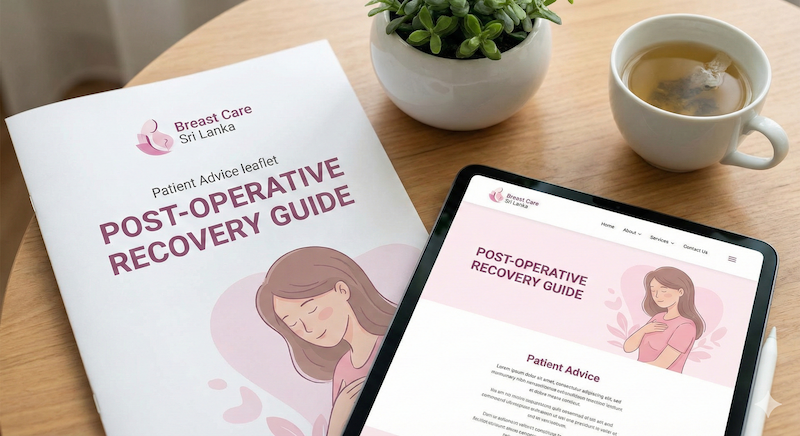
BREAST CANCER SURGERY POST-OPERATIVE RECOVERY GUIDE
Feb
Recovering from breast surgery takes time and patience. This guide will help you understand what to expect in the first few weeks at home.
WOUND CARE & DRESSINGS
-
First 24 Hours: Keep your wound dressing completely dry.
-
After 24 Hours:
-
If you have a waterproof dressing (clear plastic): You may take a brief shower. Do not scrub the wound. Let soapy water run over it gently. Pat dry with a clean towel immediately.
-
If you have a gauze/bandage dressing: Please keep it dry until your follow-up appointment. If it gets wet, contact your medical team for advice.
-
-
When to Remove: Generally, we remove the dressings at your first clinic review (usually 7–10 days post-op) However, the dressing can be removed after 3 days and earlier if it gets wet . Do not remove the “Steri-Strips” (small tapes directly on the cut) unless they fall off on their own.
MANAGING PAIN & MEDICATIONS
-
Take your prescribed painkillers regularly for the first 2–3 days, even if pain is mild. It is easier to prevent pain than to stop it once it starts.
-
Itching & Numbness: You may feel itching around the wound or numbness under the arm. This is normal and is a sign of nerves healing. Do not scratch the wound.
-
Sensation: Occasional sharp “shooting” pains are common as nerves recover.
ACTIVITY & LIFTING
-
No Heavy Lifting: Do not lift anything heavier than 2kg (e.g., a full kettle) for 2 weeks.
-
Household Chores: Avoid sweeping, mopping, or washing clothes by hand for 2 weeks.
-
Walking: Gentle walking is encouraged from Day 1 to prevent blood clots.
WHEN TO CALL THE DOCTOR (RED FLAGS)
Please contact the clinic or come to the hospital immediately if you notice:
-
Fever: Temperature above 38°C (100.4°F) with shivering.
-
Wound Changes: Spreading redness, hot skin around the wound, or pus/discharge.
-
Swelling: Sudden, severe swelling of the breast or arm.
-
Pain: Severe pain not relieved by your painkillers.
For: Wide Local Excision (WLE) + Sentinel Node Biopsy (SNB)
(The “Lumpectomy” Patient – Quickest Recovery)
-
Bra Support: You must wear a supportive sports bra (non-wired) day and night for the first week. This helps reduce internal swelling and maintains the breast shape.
-
Arm Movement: You can use your arm gently for daily tasks (eating, combing hair) immediately.
-
Exercises: Start gentle shoulder rotations the day after surgery. You should have full range of movement within 1 week.
-
Driving: You may drive once you can wear a seatbelt comfortably and perform an emergency stop without pain (usually 10-14 days).
For: Wide Local Excision (WLE) + Axillary Clearance (AC)
(Lumpectomy but with Lymph Node Clearance)
-
Drains: If you have been discharged with a drain, empty it daily and record the amount. We will remove it when the output is less than 30ml/24 hours.
-
Arm Care (Crucial): Because lymph nodes were removed, you are at risk of arm swelling (Lymphedema).
-
Avoid tight jewellery/watches on the operated arm.
-
Avoid blood tests or blood pressure checks on this arm.
-
Apply moisturiser to the arm daily to prevent dry skin/infection.
-
-
Exercises: Start gentle stretches immediately. Do not force your arm above shoulder height until the drain is removed. Once the drain is out, follow the physiotherapist’s guide to regain full movement.
For: Mastectomy + Sentinel Node Biopsy (SNB)
(Breast Removal but Minimal Arm Surgery)
-
The Wound: The incision across your chest will feel tight. This is normal. Stand up straight; do not hunch your shoulders, as this causes back pain.
-
Prosthesis: You may get a temporary soft prosthesis (“fluff”) to wear in your bra. Do not wear a heavy silicone prosthesis until the wound is fully healed (approx. 6 weeks).
-
Arm Movement: You usually do not have restrictions on arm movement, but take it slow. Stiffness in the chest wall is common.
For: Mastectomy + Axillary Clearance
(The Most Complex Recovery)
-
Drains: You will likely have a drain. Keep the drain site clean. If the tube leaks, place a clean dressing over it and contact us.
-
Seroma: After the drain is removed, fluid may build up under the arm (feeling like a water balloon). This is called a Seroma. It is usually painless. If it becomes tight or painful, come to the clinic; we can drain it simply with a needle (painless procedure).
-
Arm Care (Lifetime Advice):
-
Strictly NO needles, injections, or BP cuffs on this arm.
-
Wear gloves when gardening or washing dishes to prevent cuts.
-
Treat any small cut on this arm immediately with antiseptic.
-
-
Exercises: Do not lift your arm above shoulder level (90 degrees) while the drain is in. Once the drain is removed, you must perform your exercises daily to prevent a “frozen shoulder.”

Dr D H Buddhika Ubayawansa (MBBS,MD(surgery) MRCS ( Edin) ) Consultant Oncological Surgeon